- Tíðindi, mentan og ítróttur
Emotional journeys: young immigrants share their stories
Emotional journeys: young immigrants share their stories
“It hurts to hug your mum knowing it might be the last time,” says Alyona from Ukraine, one of four immigrants in a TV show where young people navigate their inner landscapes
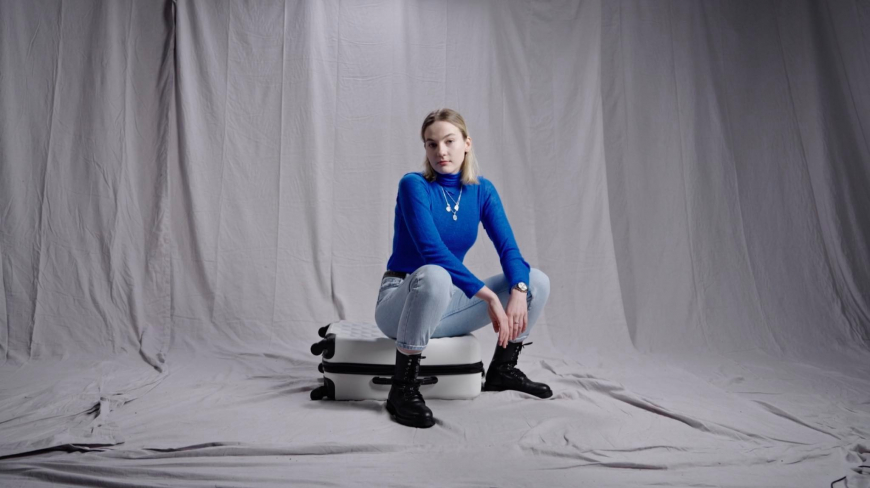
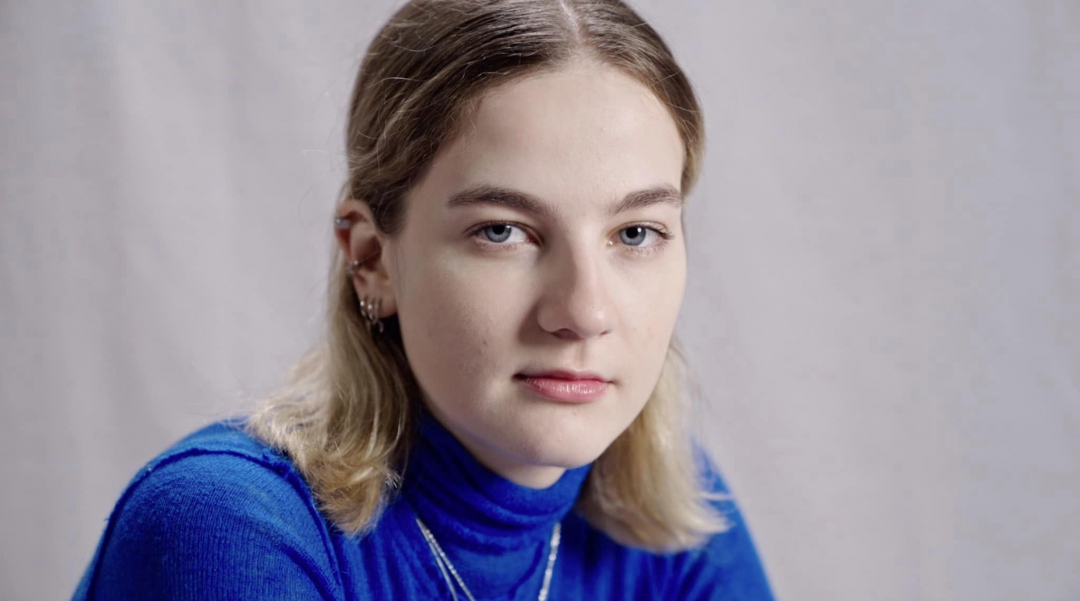
Alyona Feldova, 25, from Zaporizhzhia, Ukraine, opens up about her experience as a refugee
06.12.2023 - 09:07
A few months after Alyona Feldova fled war-torn Ukraine, she arrived in the Faroes.
Despite having arrived in a free country, she was consumed by feelings of guilt and injustice.
“It’s difficult for me to talk about this. I have very ambivalent feelings about being here today,” she says in tomorrow’s final episode of season 2 of the “Sært tú meg?” (“Do you see me”) TV programme in which young people speak openly about their emotions, this time with a focus on immigrants (in English).
As a young girl growing in Zaporizhzhia in Southeastern Ukraine, Alyona was a keen swimmer. She won numerous swimming tournaments, successfully completed Mandarin and English language courses and life seemed great.
But everything was turned on its head on 24 February 2022 when war became her new reality.
“It was about 4am in the morning. We suddenly realised that this was real. I rushed to pack some clothes while listening to the TV news. My dad took the car to the petrol station to fill up the tank. There was panic all around me. I didn’t know what to do. Should I call my sister? How about my grandparents? It was as if I was doing everything and nothing at the same time,” she explains.
Alyona and her family decided it was best for her to flee the country. She applied for a visa in the UK. But this was a time-consuming process, and there was no time for waiting.
“There are situations in life when you really don’t want to do something. But, at the same time, you know you should. That’s how it felt at the time. We all knew I had to leave.”
As men were ordered to stay and defend the country, her parents could not leave. Her sister was married, so she also decided to stay.
Since she was a little girl, Alyona had always dreamed of travelling the world. But this dream suddenly turned into a nightmare. This was not the way she had imagined departing from her family.
“It’s the most devastating feeling when you realise that you may be hugging your mum for the last time. You simply have to go. Your survival instinct kicks in.”
Just over a month after Russia’s full-scale invasion, she first left her hometown, then her country. After a few weeks, she had no money left and felt all alone in the world. In July that same year, she arrived in the Faroes.
“I felt totally dizzy when I arrived in the Faroes. When you start running, you don’t always know when to stop. That’s how I felt at the time. It took a long time before I felt safe, before I stopped being scared of people and something as seemingly harmless as fireworks.”
The first weeks in the Faroes were difficult and emotionally charged for Alyona. She was consumed by feelings of guilt and injustice, which made it difficult for her to leave her house and be with other people.
“Everybody asked ‘How are you?’ Every time I went out, someone asked me ‘How are you?’. The more you’re asked about how you’re feeling, the more you realise just how shattered you really are. You realise that you really need help. And you just have to pretend that everything is fine and that you’re not a refugee.”
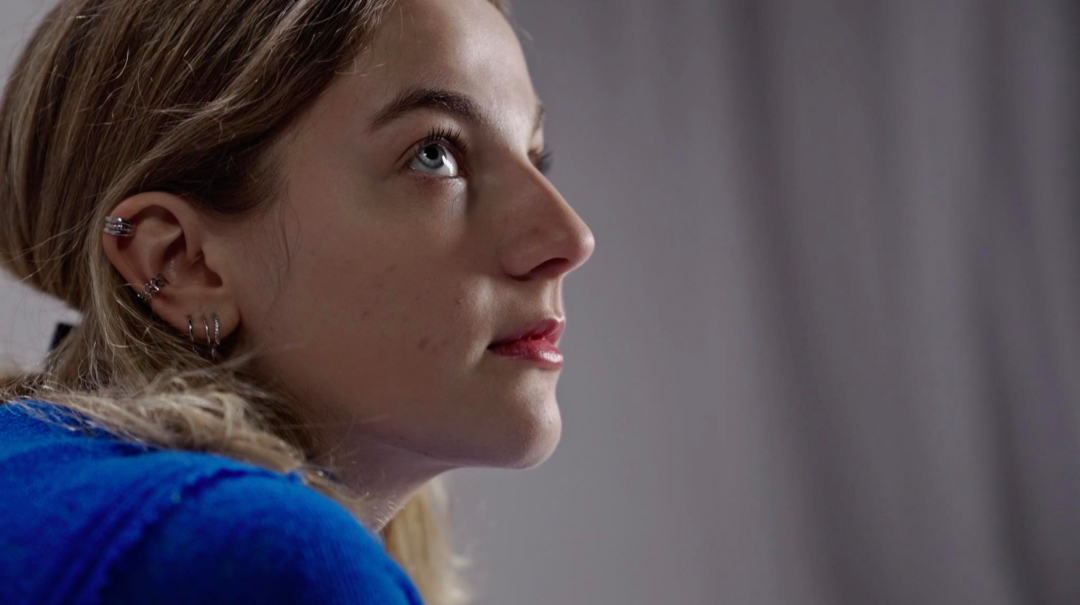
There were days when Alyona wasn’t sure she would ever feel good again. She felt as if she was taking her freedom for granted while her family and friends in Ukraine had to fight for their freedom.
“It’s a very confusing feeling you get when you’re in a free and safe country and you’re still unable to feel happy. And, at the same time, people in your homeland are fighting for their lives.”
She started seeing a psychologist, which she says helped her a lot. She also started making friends, Faroese and Ukrainian.
Of all her efforts to recover her mental health, the one thing that made the greatest impact was the strength and resolve of the Ukrainian people.
“The people of Ukraine give me the will to overcome the challenges I’ve been grappling with and to move on with my life. The people in my country are fighting not only for their freedom but for mine too. They are paying an incredibly high price for this freedom. Knowing that so many people have died in this fight for freedom, I simply cannot give up my own fight.”
Almost a year after she first applied for her visa in the UK, she was informed that her visa had been granted. But she had mixed feeling about this.
“It felt somehow wrong and unfair. I have had some of my toughest moments here in the Faroes, and now that I’m finally starting to feel better, I’m supposed to leave again. But my dear friend, who is also my landlady, told me that I am always welcome back,” she says.
“Everything changed, and I changed too. Now I’m just trying to find a path for myself. When I saw people around me dying, I felt a strong sense of hopelessness about humanity. But at the same time people have given me a strong sense of hope. People here have been so very helpful. They have dropped everything they were doing and just helped me, without even knowing me. This has given me hope, and now I feel that I also want to give hope to others."
After having lived in the UK for a few months, Alyona decided to go somewhere else.
It was difficult for her to find a job in the UK, and she somehow did not feel at home there. Another broken dream.
“Although I didn’t find what I was looking for in the UK, I did discover something much bigger: I now realise that it’s not right to put your entire life on hold because a war breaks out. I have to live, embrace life, and not just survive.”
Alyona eventually moved to Asia where she had lived and studied prior to becoming a refugee. But first she decided to go and visit her family in Ukraine, and she is happy to report that they are all alive and well.
”Now I know just how loud it is when missiles fly above you. But despite this noise, I somehow felt more secure and calm at home in Ukraine.”
She currently lives in Vietnam where she works as an English teacher.
Hear Alyona and three other young people with non-Faroese backgrounds open up about their inner journeys.
This episode, which is in English, will be aired tomorrow evening on KvF’s TV channel at 7.25pm. It will also be livestreamed here.
(As this article is translated from a Faroese article, Alyona’s quotes are not phrased exactly like she expresses herself in the programme.)
English version by prosa.fo.
More Faroese News in English.



Er kopiera
Nýggjastu sendingar í ÚV

Nýggjastu sendingar í SV