Caption:
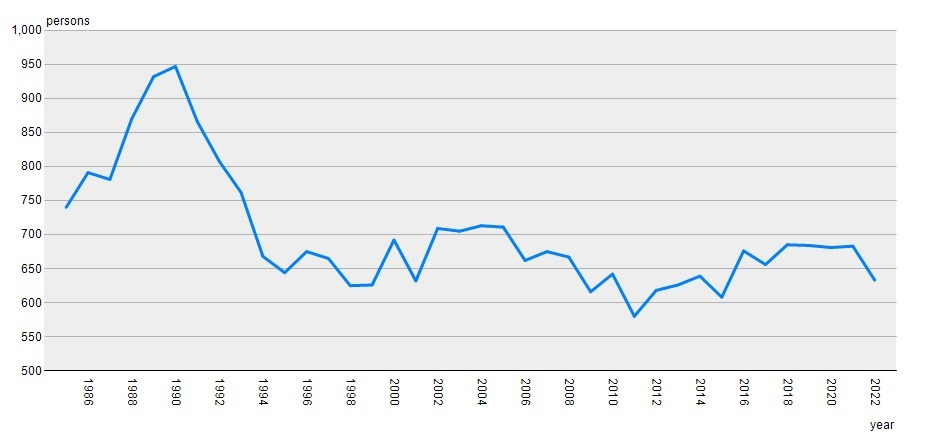
Total annual live births 1985-2022. Graph: Statistics Faroe Islands
- Tíðindi, mentan og ítróttur
Since 1985, only one year has seen less than 600 live births. This was in 2011 when 580 babies were born, according to Statistics Faroe Islands.
However, assuming that all expectant mothers due to give birth this year actually deliver their babies, this figure will drop to 565.
>> SEE ALSO Big drop in fertility rates
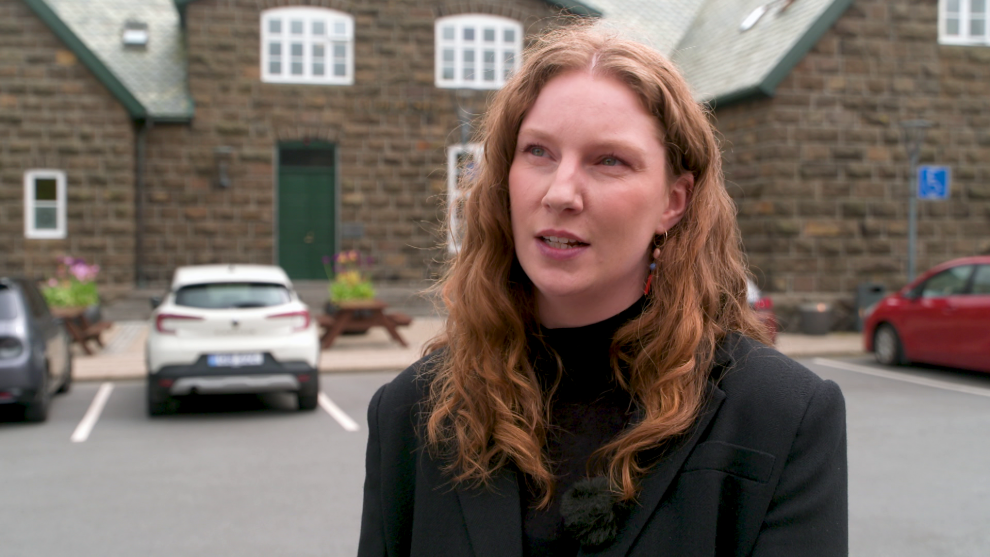
“A decline of 114 newborns in only two years is obviously rather drastic,” says Beinta Dahl-Olsen, who heads the maternity ward at the National Hospital.
With less activity at the maternity ward, Dahl-Olsen has had time to speculate on the possible reasons for this decline.
“The Faroes experienced a major financial crisis in 1992. The subsequent years saw the number of annual births dropping from 950 to about 650. It’s possible that we’re seeing something similar now.”
>> SEE ALSO Faroese babies are getting heavier
Her colleagues, Eyðfríð Djurhuus and Rannvá Zachariassen, agree and offer a few other possible reasons:
“Personal finances are a likely reason, but women are also increasingly pursuing higher education, which can delay childbearing,” says Djurhuus.
>> SEE ALSO Post lockdown baby boom expected around Christmas
This raises the question of whether this falling rate is something that maternity ward staff should get used to.
“It’s obviously not easy to predict the future, but there are indications that this may well be the case,” says Zachariassen.
More graphs related to birth rates are available on Statistics Faroe Islands’ English-language website.
Read the Faroese version of this article here.
English version by prosa.fo.
More Faroese News in English.