- Tíðindi, mentan og ítróttur
Concerns over growing psychiatry waiting lists

More and more people turn to their GP for help with their mental health.
This is one of the main reasons for the increasing waiting times for psychiatric assessment.
Another reason is that the current resources are too scarce to cover urgent treatment and assessment at the same time.
ADHD (Attention deficit hyperactivity disorder) is the dominant disorder in this statistic.
>> SEE ALSO Raising ADHD awareness
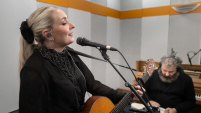
“It’s good that people take the initiative and seek help, but this also puts great pressure on the vastly understaffed and underfunded psychiatric system,” says Súsanna Olsen, chairwoman of Sinnisbati, a voluntary interest organisation for people suffering from mental illness.
“Perhaps we should consider whether GPs are sometimes too quick to refer people to psychiatric treatment when other options may be equally beneficial.”
>> SEE ALSO Great demand for psychological treatment
The increasing demand for ADHD assessment is not indicative of a problem that has suddenly appeared out of nowhere, according to Tormóður Stórá, the head of the National Hospital’s psychiatric ward.
“We should regard this as a paradigm change. People are starting to realise that disorders such as ADHD are real and they are treatable, and this is reflected in the rapidly increasing numbers.”
About 50-100 people are assessed for psychiatric disorders annually. Stórá believes the number could increase significantly if this problem was given the political priority it deserves.
>> SEE ALSO Acute lack of psychiatric first aid
“In terms of demand, psychiatry is by far the fastest-growing branch of medicine. Demand for psychiatric treatment has grown exponentially in the past few years,” he says.
“We have seen some political goodwill, but it’s far, far from enough – really, it’s nowhere near enough to meet the massive demand.”
>> SEE ALSO Free psychological treatment stops
Stórá and Olsen agree that there is no quick-fix solution to the long waiting lists for psychiatric treatment.
“Training more staff would be a good start,” says Stórá.
“But to have any hope of solving this growing problem, we need more funding. Not just incremental increases; we need a lot more funding here and now to have any hope of improving the situation.”
>> SEE ALSO Kids are “made out to be sicker than they are”
There are no official ADHD statistics in the Faroes. Stórá says that about 3-4 percent suffer from ADHD internationally.
“ADHD is highly heritable, so it is conceivable that this percentage may be a bit higher here since we have relatively low levels of genetic diversity due to the isolated location of our islands.”
Read the Faroese versions of this article here and here.
More Faroese News in English.