- Tíðindi, mentan og ítróttur
Hotels offer language lessons for foreign staff
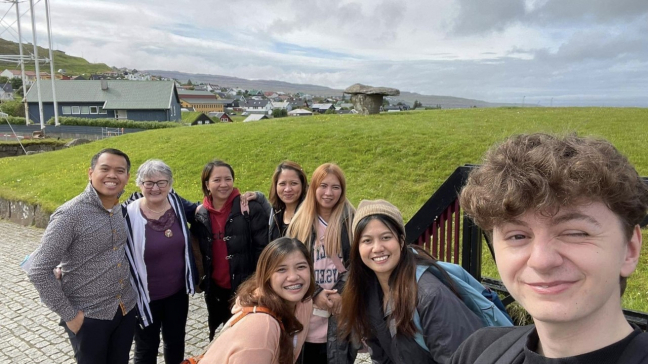
Tórshavn’s Hotel Hafnia and Hotel Brandan have hired more than 40 foreign nationals in the past three-four months.
To help these people settle in, Smyril Line, which owns the two hotels, asked Oddvá and Niels Nattestad to provide two hours of language instruction every two weeks.
The couple were asked to provide an introduction to the Faroese language and culture, with Oddvá focusing on the language classes and Niels showing the students around the city.
>> SEE ALSO Nordic students immersed in Faroese language and culture
“When we started in early May, most of these people were first-time arrivals in the Faroes, so we started with the very basics such as ‘Eg eiti’ and ‘Hvussu eitur tú?’. A lot of them found the word ‘hvussu’ very difficult to say, but they eventually learned to say it,” explains Oddvá.
“We then moved on to the Faroese alphabet because I think this is a good introduction to the sound of the Faroese language. We want to provide a solid basis for those who wish to enrol in a Faroese language course at Kvøldskúlin.”
>> SEE ALSO More funding needed for teaching Faroese as a second language
The 40 staff members come from countries such as the Philippines, Kenya, Ukraine and Romania.
Ronaldo came to the Faroes from the Philippines about three months ago and works as a chef at Hotel Hafnia.
“I’ve learned about the letters, the numbers, the basic greetings – and also some of the words that pop up all the time here, especially ‘bíða’ (‘wait’),” he says with a laugh.
“It’s great. I’m learning all the time. I believe it’s very important to learn the language. It’s just too hard to come to a place as a foreigner when you can’t understand what people say.”
>> SEE ALSO Language barrier has a ripple effect on newcomers
Blesilda, also from the Philippines, works in housekeeping at Hotel Hafnia. She finds the Faroese language difficult to learn.
“The pronunciation – the ‘øøø’ and the ‘ááá’ and the ‘æææ’ – is very difficult for the Filipino tongue,” she says.
“I’m planning to stay here for a while, so I’ll do what I can to learn the language because it’s important to be able to communicate with the locals.”
Social duty
Súnfríð Ihlen, who oversees integration of Smyril Line’s foreign staff, says the company has a social duty to help its non-Faroese staff integrate into the local community.
“I think they appreciate this opportunity to learn our language free of charge, and it’s great to see that they are very keen to learn,” she says.
“Smyril Line obviously benefits from having happy employees. And the more we can do to help them integrate, the better it is for everyone.”
Read the Faroese version of this article here.
Translated by prosa.fo.
More Faroese News in English.